
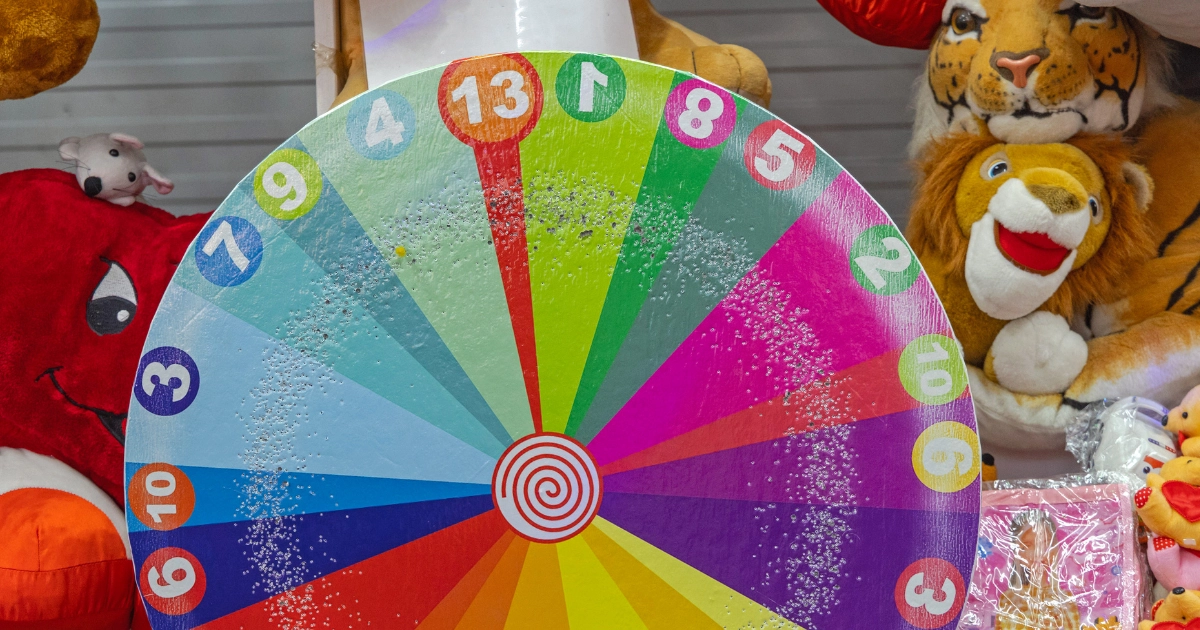
Yes. Our yes or no wheel is as fair as a computer can make it, and it’s fairer than a real coin. We know because we spun it a million times.
What we did
We took the code that runs our wheel and had a computer replay one million spins, with the same eight slices and the same three to six full turns before it stops.
We ran it in Node, which uses the same JavaScript engine as Chrome. So these are the same kind of random numbers your browser makes when you tap Spin.
Here’s what came back:
- YES came up 50.03% of the time. NO came up 49.97%.
- The answer on the screen matched the slice under the pointer on every single spin.
- The longest streak was 21 of the same answer in a row.
Is 50.03% close enough?
It’s about as close as chance ever gets. Over a million spins, a perfectly fair wheel usually drifts around 0.05 points away from 50%, one way or the other. Ours drifted 0.03.
If it had come back at 52% or 48%, that would be a problem. At 50.03%, it’s a coin that’s behaving itself.
Why 21 in a row is normal
A streak of 21 is normal for chance. In a million fair spins, the longest run of one answer usually lands somewhere around 20.
Shorter streaks happen all the time, too. Spin five times and there’s about a 3% chance (1 in 32) you’ll get five NOs.
The wheel has no memory, either. After four NOs, the fifth spin is still a fair 50/50. If you’ve ever felt that YES is “due,” that feeling has a name: the gambler’s fallacy. The wheel doesn’t know what it did last time.
Where the randomness comes from
When you tap Spin, your browser picks a random stopping point with a built-in function called Math.random(). Mozilla’s documentation describes it as a pseudo-random number generator. That means a formula makes the numbers, starting from a seed your browser picks and you can’t see or change.
Chrome’s version is an algorithm called xorshift128+. The Chrome team switched to it in 2015 because the old one failed a standard set of randomness tests. The new one passes them.
Mozilla also says not to use Math.random() for anything to do with security, like passwords. That’s a good rule. For “should I order pizza,” it’s plenty.
If you want randomness straight from nature, RANDOM.ORG makes its numbers from atmospheric noise. It’s a great service. You won’t need it to decide between tacos and pasta.
A real coin is a little less fair
Here’s the part that surprised me. A team led by František Bartoš flipped coins 350,757 times and found that a coin lands on the same side it started on 50.8% of the time. The small wobble from a thumb flip gives the starting side a tiny edge.
So if you flip a coin that starts heads-up, heads wins a little more often than it should. Our wheel came out at 50.03%. Your thumb has opinions. The wheel doesn’t.
Could an online wheel be rigged?
Any wheel built in code could be written to favor an answer. Ours picks a random stopping point and reads the slice under the pointer, and there’s no setting anywhere that leans toward YES or NO.
We also never see your question. You don’t type it anywhere, and the spin happens in your browser.
What this means for you
Trust the wheel at least as much as you’d trust a coin flip. More, actually.
That’s the whole point of it in our house. ADHD runs in our family, and some days a small decision can stall everything. So we ask the question out loud, spin, and go with the answer. You can read more about why we built it on our About page.
Want a third option for the days when the answer is “not yet”? Try the Yes, No or Maybe Wheel. We tested that one too: each answer came up about a third of the time.